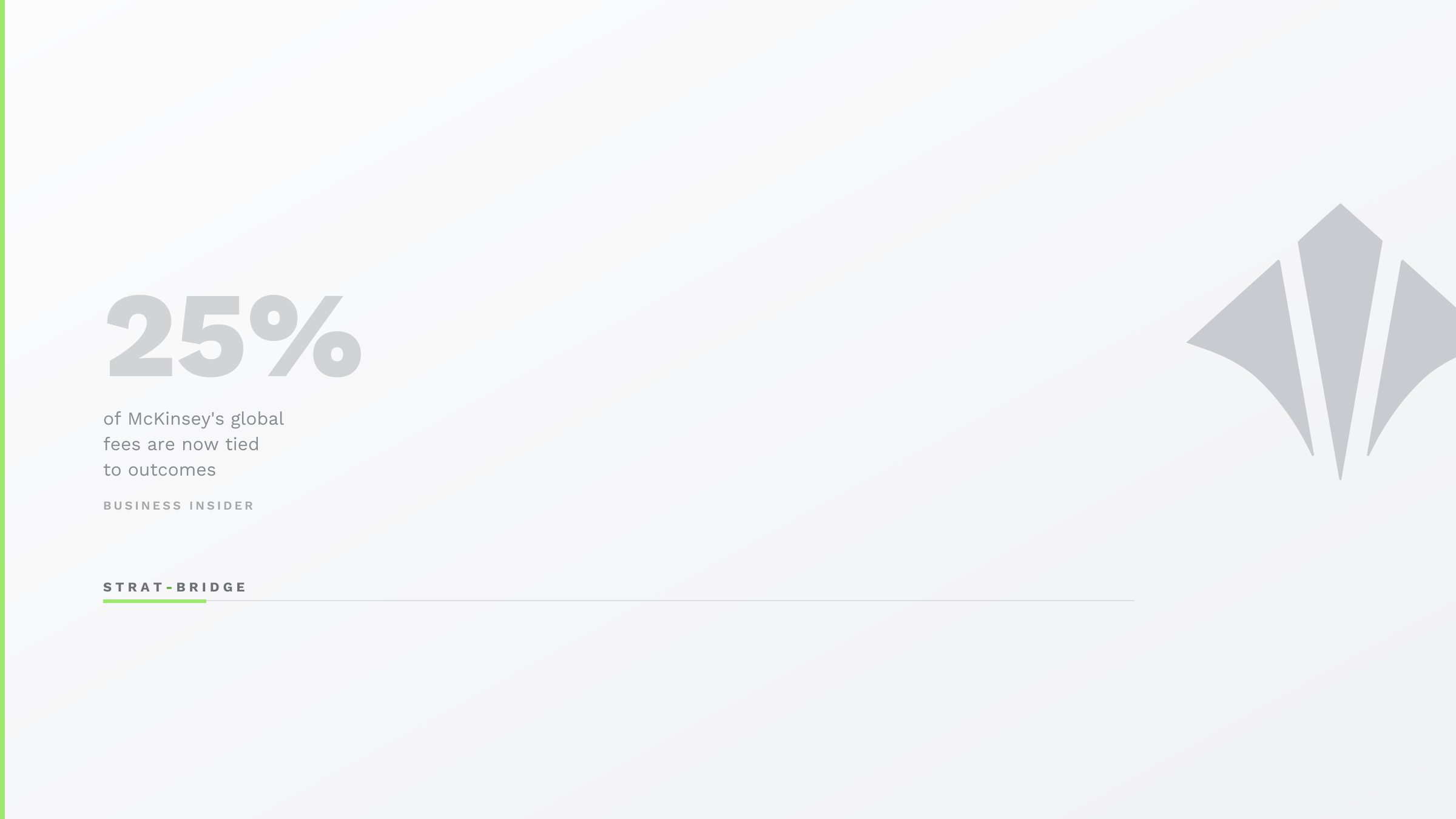
Summary: Roland Berger is the sole investor in CNTR, the Frankfurt AI start-up founded by Jonas Andrulis. If clients can run the software themselves and call in advisers only where judgement matters, it points to a different consulting model.
- Roland Berger is the sole investor in CNTR, a Frankfurt AI start-up founded by Aleph Alpha founder Jonas Andrulis, and Roland Berger’s Global Managing Partner Stefan Schaible is also CNTR’s Chief Operating Officer.
- CNTR differs from BCG X and McKinsey’s QuantumBlack because it is an independent technology company selling a product, not a unit inside a consulting firm selling services.
- A software-led consulting model would let mid-sized companies run the tool themselves and buy advice only where judgement is needed, which changes team size, fees and the client relationship.
- Clients are already cutting advisory spend: UniCredit reported a 24% drop in external consultant spending in the first half of 2026, according to the Financial Times.
Roland Berger is backing an independent AI company, and it may point to a different consulting model.
This week Handelsblatt published an inside look at CNTR, the start-up Roland Berger has built with Aleph Alpha founder Jonas Andrulis. The paper describes the aim as a “problem-solving machine”. It is software that helps companies work through their own analyses and strategies, alongside employees, AI agents and advisers.
The founders want the software ready by January. They are aiming it primarily at mid-sized companies.
Consulting firms have been combining advice and technology for years. What makes CNTR stand out is the route Roland Berger has chosen: backing an independent company rather than building another unit inside the firm.
Why CNTR is named after centaur chess
CNTR is named after centaur chess, in which a human player and a computer play together as one team.
Garry Kasparov popularised the format after his defeat by IBM’s Deep Blue. The idea is that a human working with a machine can outplay either one alone.
If clients can buy the software, run it themselves and call in advisers only where judgement matters, the thing they buy changes from a project to a platform.
What CNTR is, and why Roland Berger’s role matters
CNTR is a Frankfurt AI start-up founded by Jonas Andrulis, with Roland Berger as its sole investor. Roland Berger’s Global Managing Partner, Stefan Schaible, is also its Chief Operating Officer.
Roland Berger announced the investment in February. At launch, Schaible said: “Industrial AI rarely fails because of models or compute power.” His argument was that it fails because it does not understand a client’s industry, processes and decision logic. It is a sharp diagnosis, and it plays to Roland Berger’s strengths.
Andrulis framed the same problem from the client’s side: “Many companies are deploying AI today without achieving the productivity gains they expected.”
Roland Berger brings what many AI start-ups lack: deep industry knowledge and long-standing client relationships, particularly with industrial companies.
In March, Roland Berger introduced CNTR by name. It described collaborative AI systems that bring human judgement into agent-driven workflows and decisions. Roland Berger supplies process and industry expertise.
Nine months on, Handelsblatt was shown the alpha version of the product at CNTR’s new Frankfurt office, Schaible wrote on LinkedIn this week. He called this first version an important milestone.
The double role is a strong signal of commitment. The head of a global strategy firm also holds an operating role at the start-up, which puts real weight behind it.
It is also a bold move. Rather than protecting its existing model, Roland Berger is backing a company that could help reshape it.
How CNTR differs from BCG X and QuantumBlack
CNTR differs from BCG X and QuantumBlack because it is an independent technology company with its own product, rather than a unit inside a consulting firm.
BCG X is BCG’s tech build and design unit. McKinsey’s QuantumBlack combines AI expertise with its consulting work. Both bring engineering into the consulting relationship.
Stefan Schaible drew the line himself on LinkedIn after the SZ Wirtschaftsgipfel this week. CNTR, he wrote, is not another chatbot or an AI tool for Roland Berger, but an independent technology company.
Both models have real strengths. A unit inside a firm brings engineering into every engagement and makes its advisers more productive. A separate product can reach clients who would never buy a full consulting team.
How a software-led consulting model changes what clients buy
A software-led consulting model would let a client use the tool day to day and bring in advisers only where judgement is needed.
That is a very different relationship from buying a project and a team for three months. The team gets smaller. The fee moves away from days and towards licences, outcomes or both. The relationship runs for years rather than weeks.
CNTR is aimed primarily at mid-sized companies. I’d guess that includes businesses that struggle to justify a full consulting team.
The large firms want the same clients. Accenture launched Accenture Edge in June 2026 for companies with $300mn to $3bn in revenue. It puts the segment at $240bn, as we covered in why mid-market consulting takes more than price.
In other words, Accenture is lowering the cost of a team. CNTR is offering software that clients can run themselves. Both are going after the same budget.
Technology companies now compete for the same client
Competition for consulting work now comes from technology companies as well as other consultancies.
Palantir invented the forward-deployed engineer: someone embedded with the client to build and deploy working systems. TechCrunch reported in July that Anthropic and OpenAI have each set up services ventures staffed this way: Ode with Anthropic and OpenAI’s Deployment Company.
Anthropic and the buyout group Hg are now building a European equivalent, which we looked at in the Anthropic consultancy runs through PE.
The effect on spend is already visible. The FT quotes SharkNinja’s chief executive Mark Barrocas: “We are definitely spending less with consultants.” SharkNinja had just completed an eight-week project using Palantir technology.
We have described a fifth consulting model being assembled from frontier models, capital, client access and embedded delivery. CNTR can be read as a European version of it, with a strategy firm’s industry knowledge and client relationships behind it.
Where human judgement still earns the fee
Human judgement still earns the fee where the work depends on industry knowledge, client context and accountability that a model cannot supply.
That is Stefan Schaible’s own answer. In his LinkedIn post he argued that, as powerful models become available to everyone, automating standard work turns into a commodity. The advantage, he wrote, lies in combining AI with what is harder to commoditise: judgement, creativity, experience and deep industry knowledge.
In a second post this week, Schaible went a step further. Human expertise, he wrote, is not just a final check on an AI-generated recommendation. It helps shape the answer from the start.
That is a different role for the adviser. Checking a machine’s output is a review task. Shaping the answer from the start is the work clients have always paid senior advisers for.
It fits a wider pattern. Clients are moving capability back in-house, buying tools directly and keeping advisers for the decisions that carry risk.
As a result, advisers who mainly produce analysis will increasingly compete with software. Advisers who help a board decide, and stand behind the decision, will not.
What matters now is what the client actually buys.
Ben Appleton, Strat-Bridge
Why fee pressure makes the consulting model question urgent
Fee pressure makes the consulting model question urgent, because clients are already cutting what they spend on advisers.
In the same FT report, UniCredit reported a 24% drop in external consultant spending in the first half of 2026. Société Générale reported a 9% decline. Commerzbank plans to invest €600m in AI by 2030, partly to reduce its consulting bill.
The firms themselves are adjusting. Accenture grew revenue while slowing hiring, a sign that consulting headcount no longer drives growth.
If clients pay less for the same team, the team has to change shape. Software that clients keep using is one answer to that.
A new consulting model needs two kinds of talent
A new consulting model needs two kinds of talent, because experienced advisers and product engineers build different things and want different careers.
An experienced adviser often wants client ownership, a practice to build and a route to partnership. A product engineer often wants technical depth and a product to ship.
The prospect of partnership won’t appeal to everyone, and it doesn’t need to.
An independent technology company can build careers for engineers alongside those for advisers. That may prove one of the advantages of the structure Roland Berger has chosen.
We have argued that consulting’s talent model is changing faster than its career model. It is also why competition for senior AI talent has become so intense.
A model like CNTR’s brings both kinds of people together as one team, just as the centaur in its name does. That mix could matter as much as the technology.
What to watch as CNTR launches
CNTR’s software is due by January. It arrives with an experienced founder, a committed investor and a clear focus on mid-sized companies.
Pricing will need to follow outcomes, and advisers will need to stay close to the decisions that matter. Engineers will need a career that is not a copy of the partner track.
The risk for the wider market is treating AI products as a new way to sell consulting days. Could this become a different way to buy consulting, and would clients prefer it?
In English: How the Roland Berger boss wants to reinvent consulting
Read the original article
Further reading from Strat-Bridge
- A Fifth Consulting Model Is Being AssembledThe fifth consulting model is assembled, not built: Ode pairs Anthropic's models with capital, client access and delivery.
- Mid-Market Consulting Takes More Than PriceMid-market consulting is the new target for Accenture and the Big Four. Cheaper AI delivery opens the door,…
- Consulting’s Talent Model Is Changing Faster Than Its Career ModelConsulting talent model is shifting: firms now hire engineers, not just MBAs, but career paths, revenue credit and…
- Consulting Team Moves & Lift-Outs — how they workPartner-led team moves, practice builds and talent-led acquisition support for consulting firms across the UK, DACH and Europe.…
Work with Strat-Bridge
Strat-Bridge is a retained executive search firm placing Partner & Director-level leaders into strategy and management consulting firms across Europe.
Hiring senior consulting talent? Book a discovery call. Exploring your next leadership move? Join our leadership network.

Ben Appleton is the founder of Strat-Bridge, a specialist executive search partner to the management consulting industry. He works with global consulting firms and senior leaders across the UK, Germany, Switzerland, and beyond — helping them build capability at the Partner and Director level.
Connect with Ben on LinkedIn or email ben@strat-bridge.com.